Integrity means alignment of words and actions with inner values. It means sticking to these values even when an alternative path may be easier or more advantageous.
A leader with integrity can be trusted and will be admired for sticking to strong values. They also act as a powerful model for people to copy, thus building an entire organization with powerful and effective cultural values.
Dedication
Dedication means spending whatever time and energy on a task is required to get the job done, rather than giving it whatever time you have available.
The work of most leadership positions is not something to do ‘if time’. It means giving your whole self to the task, dedicating yourself to success and to leading others with you.
Magnanimity
A magnanimous person gives credit where it is due. It also means being gracious in defeat and allowing others who are defeated to retain their dignity.
Magnanimity in leadership includes crediting the people with success and accepting personal responsibility for failures.
Humility
Humility is the opposite of arrogance and narcissism. It means recognizing that you are not inherently superior to others and consequently that they are not inferior to you. It does not mean diminishing yourself, nor does it mean exalting yourself.
Humble leaders do not debase themselves, neither falsely nor due to low self-esteem. They simply recognize all people as equal in value and know that their position does not make them a god.
Openness
Openness means being able to listen to ideas that are outside one’s current mental models, being able to suspend judgement until after one has heard someone else’s ideas.
An open leader listens to their people without trying to shut them down early, which at least demonstrates care and builds trust. Openness also treats other ideas as potentially better than one’s own ideas. In the uncertain world of new territory, being able to openly consider alternatives is an important skill.
Creativity
Creativity means thinking differently, being able to get outside the box and take a new and different viewpoint on things.
For a leader to be able to see a new future towards which they will lead their followers, creativity provides the ability to think differently and see things that others have not seen, and thus giving reason for followers to follow.
Friday, August 03, 2007


Saturday, July 28, 2007
Ten Tips: How to survive in England
Good article picked up from http://www.rediff.com/getahead/2007/jul/27abr1.htm
Ten Tips: How to survive in England
1. In India it is silly to say 'please'. In England [Images], it is silly not to.
2. No Englishman -- or woman -- will entertain your request without a 'please'; in fact, should you be fool enough to forget the magic word, an Englishman is required by law to put you to painful public death before sundown, or, at the very least, pull himself to maximum height, stare down his nose, and say, with the coldness of an Arctic winter, "I beg your pardon, sir!"
3. It is common to have five pleases in a four-word sentence. It is expected of you. So, please, start your sentence with a please; end it with another, please.
4. If hedging was an Olympic sport, the English would win it every single time.By 'hedging', I don't mean the act of making hedges (the English are very good at that too), but what is crudely known as 'beating around the bush'. The English are simply marvellous at it. They consider it the height of rudeness to come straight to the point, especially if they have a request of you, and need to prep themselves lavishly with 'hmms', 'hahs' and the weather. As a considerate fellow being, you must entertain this. You must grant them their time. They will make their point -- usually within the year.
5. By the same token, resist the urge to make direct requests. If you want to borrow a pen from someone, it won't do to yell across, "Mind if I use that for a minute?" Start with apologies. Say you are dreadfully sorry for making a nuisance of yourself. Apologise for polluting the air in the same room as the pen-owner. If the mood moves you, inform him you are deeply ashamed of being born, but had no choice in the matter. After five minutes or so in such vain, you may mention the pen in a meandering fashion:"I was just wondering... um, in normal circumstances I wouldn't even dream of asking you this, but, um, I find myself in a terrible situation today... of course, it is my own fault, and, um, it is really quite silly of me to bother you, I know, but in case you are not using that pen, er, if you can possibly spare it I mean, would you mind terribly if I borrowed it for a minute -- only if you don't need it."You must look suitably apologetic and embarrassed when you make this request. Also, do note the very last part of that sentence: you must, must leave an honourable exit for the other.
6. Don't tell an Englishman to shut up. He will drop dead with shock.In India 'Aw, shut up!', 'Buzz off', 'Drop dead', 'Get a life', etc are considered essentials in any healthy conversation. In England, not.Trouble with the English is, even in their rudeness they are polite. In India if you want to tell someone their work sucks, you would say (and here I quote an old boss):"This is rubbish. Redo it now or don't bother coming in on Monday!"The correct way to put that sentiment across in England, however, is: "Excellent! This is very good work! Very good work indeed! But perhaps you could consider smoothening out the edges a bit? Oh, no, you don't have to rewrite the whole piece! Just do the lead, and the bit in the middle, and the end, if you can possibly spare the time."
7. Never jump a queue -- and ensure you don't start one accidentally.The English are passionate about queuing. They derive immense pleasure from the exercise and are never more content than when they are in a long queue. Nowhere on earth will you see such perfect pieces of art, such warm links of well-spaced personal cubicles with a Daily Mail-reading Englishman or woman in the middle of each (never 'bunch up' and crowd the person in front; that's sacrilege), wonderfully unhurried (never show your impatience; queuing is meant to pleasurable), and gracefully tailing into the wide grey yonder. Seriously, a lot of effort goes into it.And the English will queue at the drop of the hat. An Englishman will be hurrying home, desperate for his cup of tea and buttered scone, when, lo, he sees you admiring a particularly attractive mannequin. This is where you have to be careful. If perchance you have placed yourself behind some other idiot like yourself, the Englishman will rub his hands gleefully. "Aha," he will say to himself, "there's a nice little queue there! Let me read the Mail and be happy and content again!"By the time you turn around and realise your mistake, there will be a solid line all the way to Scotland.
8. Most Indians complain about how 'cold' the English are. This isn't really true. The English aren't cold; they are just not warm.It isn't in the English blood to be overtly friendly. In India, five minutes after you meet a stranger, it is quite common to invite him home for dinner. In England it will take a few years.For one, an Englishman considers his house not just his castle, but, as social anthropologist Kate Fox puts it, 'the embodiment of his privacy rules � his identity, his main status indicator and his prime obsession.' Naturally he's careful about who he lets in.
9. Furthermore, because the English cherish their privacy so much, it doesn't occur to them you actually look forward to company. In fact, quite often, when you feel they are being 'standoffish', they are trying to respect your private space.When this happens, you must not feel offended and call them 'thanda firangs'. You must forgive them -- remember, they are only English -- and show them the correct path by asking them home.
10. Finally, if an Englishman asks you, "Are you all right?" do not worry. It's not because you look sick, or your zipper is open (though a discreet check is always advisable). Nor should you take it as an invitation to unburden all your troubles on him. It's just his way of asking "How are you?"
Ten Tips: How to survive in England
1. In India it is silly to say 'please'. In England [Images], it is silly not to.
2. No Englishman -- or woman -- will entertain your request without a 'please'; in fact, should you be fool enough to forget the magic word, an Englishman is required by law to put you to painful public death before sundown, or, at the very least, pull himself to maximum height, stare down his nose, and say, with the coldness of an Arctic winter, "I beg your pardon, sir!"
3. It is common to have five pleases in a four-word sentence. It is expected of you. So, please, start your sentence with a please; end it with another, please.
4. If hedging was an Olympic sport, the English would win it every single time.By 'hedging', I don't mean the act of making hedges (the English are very good at that too), but what is crudely known as 'beating around the bush'. The English are simply marvellous at it. They consider it the height of rudeness to come straight to the point, especially if they have a request of you, and need to prep themselves lavishly with 'hmms', 'hahs' and the weather. As a considerate fellow being, you must entertain this. You must grant them their time. They will make their point -- usually within the year.
5. By the same token, resist the urge to make direct requests. If you want to borrow a pen from someone, it won't do to yell across, "Mind if I use that for a minute?" Start with apologies. Say you are dreadfully sorry for making a nuisance of yourself. Apologise for polluting the air in the same room as the pen-owner. If the mood moves you, inform him you are deeply ashamed of being born, but had no choice in the matter. After five minutes or so in such vain, you may mention the pen in a meandering fashion:"I was just wondering... um, in normal circumstances I wouldn't even dream of asking you this, but, um, I find myself in a terrible situation today... of course, it is my own fault, and, um, it is really quite silly of me to bother you, I know, but in case you are not using that pen, er, if you can possibly spare it I mean, would you mind terribly if I borrowed it for a minute -- only if you don't need it."You must look suitably apologetic and embarrassed when you make this request. Also, do note the very last part of that sentence: you must, must leave an honourable exit for the other.
6. Don't tell an Englishman to shut up. He will drop dead with shock.In India 'Aw, shut up!', 'Buzz off', 'Drop dead', 'Get a life', etc are considered essentials in any healthy conversation. In England, not.Trouble with the English is, even in their rudeness they are polite. In India if you want to tell someone their work sucks, you would say (and here I quote an old boss):"This is rubbish. Redo it now or don't bother coming in on Monday!"The correct way to put that sentiment across in England, however, is: "Excellent! This is very good work! Very good work indeed! But perhaps you could consider smoothening out the edges a bit? Oh, no, you don't have to rewrite the whole piece! Just do the lead, and the bit in the middle, and the end, if you can possibly spare the time."
7. Never jump a queue -- and ensure you don't start one accidentally.The English are passionate about queuing. They derive immense pleasure from the exercise and are never more content than when they are in a long queue. Nowhere on earth will you see such perfect pieces of art, such warm links of well-spaced personal cubicles with a Daily Mail-reading Englishman or woman in the middle of each (never 'bunch up' and crowd the person in front; that's sacrilege), wonderfully unhurried (never show your impatience; queuing is meant to pleasurable), and gracefully tailing into the wide grey yonder. Seriously, a lot of effort goes into it.And the English will queue at the drop of the hat. An Englishman will be hurrying home, desperate for his cup of tea and buttered scone, when, lo, he sees you admiring a particularly attractive mannequin. This is where you have to be careful. If perchance you have placed yourself behind some other idiot like yourself, the Englishman will rub his hands gleefully. "Aha," he will say to himself, "there's a nice little queue there! Let me read the Mail and be happy and content again!"By the time you turn around and realise your mistake, there will be a solid line all the way to Scotland.
8. Most Indians complain about how 'cold' the English are. This isn't really true. The English aren't cold; they are just not warm.It isn't in the English blood to be overtly friendly. In India, five minutes after you meet a stranger, it is quite common to invite him home for dinner. In England it will take a few years.For one, an Englishman considers his house not just his castle, but, as social anthropologist Kate Fox puts it, 'the embodiment of his privacy rules � his identity, his main status indicator and his prime obsession.' Naturally he's careful about who he lets in.
9. Furthermore, because the English cherish their privacy so much, it doesn't occur to them you actually look forward to company. In fact, quite often, when you feel they are being 'standoffish', they are trying to respect your private space.When this happens, you must not feel offended and call them 'thanda firangs'. You must forgive them -- remember, they are only English -- and show them the correct path by asking them home.
10. Finally, if an Englishman asks you, "Are you all right?" do not worry. It's not because you look sick, or your zipper is open (though a discreet check is always advisable). Nor should you take it as an invitation to unburden all your troubles on him. It's just his way of asking "How are you?"
Monday, May 14, 2007


The 5 Most Crucial Daily Questions for Success
The 5 Most Crucial Daily Questions for Success
This post is written as a contribution to Problogger’s current Group Writing Project. Click here to check it out, and find some amazing posts to enjoy. The number of people contributing to this is really impressive and you are sure to learn a thing or two.
This week’s topic is ‘Top 5′ lists, and I felt that there could be no better subject to write about than success.
SUCCESS. We all crave it, even if we think we don’t. We can each define it for ourselves. The beautiful thing about success is that it is a journey AND a destination…each individual choice we make can be success, and add to our success overall. We always have a new choice in the next moment, no matter what has come before.
If success - in any area - is important to you, here is my list for the most powerfully effective, personal strategy imaginable. Ask yourself (and answer - then ACT on) these five questions each day:
What is the most effective use of my time right now?
Does this activity I am about to begin, or this choice I am about to make, serve me ie. lead me closer to my chosen result, or further away?
What can I do today that I will be grateful I did when tomorrow comes?
What am I grateful for today?
If I could make one small change today - like dropping or adopting a new habit, thought or belief - that could positively affect my life in the future, what would it be?
Give yourself just a few days of asking and acting on these 5 questions, and I guarantee you will be shocked at the results as things begin to change around you…and you will be hooked on the achievement you are experiencing.
Enjoy! And many thanks to Problogger for hosting this.
Saturday, May 12, 2007
How to Think Like a Genius
Great article i read i loved it !!
Source : http://www.theoptimizedlife.com/success/how-to-think-like-a-genius/
How to Think Like a Genius
4 Apr, 2007 Success, Education
At this very moment, you are holding unbound potential. Youhold within your possession the most powerful learning andcreative problem-solving system known to man, far superiorto any supercomputer ever invented. It is your brain.There are 100 billion neurons in your 3-pound brain.
By its very design, the human brain stores vast potentialfor memory, learning, and creativity. However, your capacityfor learning and achievement must be unlocked. Althougheveryone holds this incredible power, the brain does notgive of its’ powers away freely.
Geniuses of this world have successfully tapped into thisunlimited power, including Einstein, Galileo, Newton, andMozart.
Within the rest of this article, we will turn to these samerevolutionary minds in order to unlock the genius that ishiding in the tapestry of our own minds.
God didn’t give us formal instruction manuals for our brain. Therefore, we must explore the power of thought on our own.Let this article be your guide.
1. The first step is to expand your consciousness as well asyour perspectives.
The genius mind will look at a problem from many differentperspectives. They are literally able to place themselvescompletely in someone else’s shoes in order to experience anew way of looking at things. By doing this, they expandtheir knowledge and consciousness of the world around them.
Look at problems from a variety of different perspectives.Most people only rely on their own perspective, andtherefore always have a very narrow view of the world.
Leonardo da Vinci believed that, to gain knowledge about theform of a problem, you must begin by learning how torestructure it in many different ways. He believed that thefirst way you look at a problem is entirely too biased. Youare only seeing the problem from one perspective: yours.
You can find new solutions to the problem by looking at itfrom a variety of different perspectives. According toEinstein, “You cannot solve a problem with the same type ofthinking that is creating it.”
Einstein insisted that the secret of his genius was hisability to look at problems in a childlike, imaginativeway.
To expand his view of the world, Einstein developed amastermind group that he called the Olympiad. This groupheld intensive discussions on topics ranging frommathematics and physics to philosophy and literature.
These forums provided the stimulus needed for higher-levelthinking and were often combine with camping trips involvinghiking, swimming, and a good dose of humor.
The genius lives at a high level of consciousness about theworld around them. They are receptive to new ideas, whichprovide them with even greater opportunity. The person whoclings to their comfort zone is living in a low level ofconsciousness. Their experiences each day are often arepetition of the previous day.
You reach a higher level of consciousness when youreach new levels of understanding, experience a majorgrowth experience, or embrace new ways of thinking.
When you were eight years old, you had a different view ofthe world than you do today. This is because you are nowliving in a higher consciousness/awareness of the worldaround you. You must constantly seek to expand yourawareness if you want to grow.
Your consciousness determines how you experience life.
To expand your awareness, you must consistently seekopportunities for growth. Look for new relationships. Expandyour knowledge. Step out of your comfort zone. Experiencelife to the fullest.
2. Once you have begun seeking your greatest aims in life,you must also persist…
The most successful people in life are the ones who are themost persistent. Interestingly, enough the most successfulpeople in life are also the ones who have experienced themost failure.
The rest are too afraid to try and therefore neverexperience success or failure.
In fact, I would argue that failure is the quickest path tosuccess. The greatest success is always preceded by a longlist of failures.
Think of Thomas Edison, who after 10,000 attempts atcreating the electric lightbulb, said, “I have not failed.I’ve just found 10,000 ways that won’t work.”Failure is a prerequisite for success; embrace it as alearning experience that brings you one step closer to yourultimate goal.
To truly be great, you must not be afraid of failing.
The leaders in life don’t fear failure. Like most, youprobably learned in elementary school about theaccomplishments of Christopher Columbus. However, youprobably don’t know that the likely result of his journeywas humiliation, financial ruin, or even death. He wasmaking a journey, which most people believed would cause himto fall off the edge of the Earth.
All previous efforts to cross the Atlantic had been made bysailors who clung to the European coast in order to ensure ameans of return. Columbus, however, sailed perpendicular tothe shoreline. He was venturing into the unknown, withoutknowing what, if anything, lay ahead.
In the end, it turned out that Columbus, was, in fact, avisionary genius.
Even after six weeks at sea with no sight of land, hemaintained unwavering belief in his goal. Most people wouldhave given up at this point, but Columbus kept going. Thiswas one of the most important factors in determining hissuccess.
Most of what people refer to as failure is simply a lack ofpersistence.
How many times do we hug the coastline in our own lives,latching onto the familiar? Growth is always preceded bychange. For us to improve and grow, we must embrace changeand constantly step out of our old familiar comfort zones.When we do, we will find that we begin to live a life fullof adventure and increased opportunity.
3. The third step to thinking like a genius is to Visualize!
Albert Einstein, Leonardo da Vinci, Walt Disney, NikolaTesla, and even Mozart all ascribed their creative genius totheir ability to visualize.
Einstein said that all of his most important and productivethinking was done by “combinatory play” with “images” in hismind. Einstein used images, visual patterns and associationsto discover more about the world around him.
Einstein believed that the spirit of learning and creativethought were lost in strict rote learning. Instead, heturned to his own imagination and visualization.
Visualization is an incredibly powerful tool in solvingproblems. Often times much more powerful that simply usingwords or numbers.
Visual thinking is done in the right side of the brain,presenting new problem solving and big-picture thinking.Visualization goes hand in hand with our next geniusprinciple…
4. Imagination
Einstein was well acquainted with the childlike sense ofplay, possibility, and humor. His ability to remain in achildlike state of wonder and curiosity is the essence ofhis genius.
Dr. Jacques Hadmard spent much of his life studying thethought processes of great scientists and mathematicians. Hefound that their thinking process was characterized not bywords or standard mathematical symbols, but instead byvisual imagery.
The same was true for Einstein, who said, “The words of thelanguage, as they are written or spoken, do not seem to playany role in my mechanisms of thought.”
He also wrote that his thought processes instead “rely, moreor less, on clear images of a visual and some of a musculartype.”
These few sentences give us a rare insight into one of thegreatest minds. Einstein teaches us the importance ofthinking visually.
Dr. Marian Diamond and her colleagues at the University ofCalifornia at Berkeley published a paper entitled “On theBrain of a Scientist: Albert Einstein.” Their researchshowed that Einstein’s brain contained 400 percent more“glial” cells per neuron than average. They also found thathis brain was especially well developed in the area of thebrain used for association.
However, we will never know whether Einstein’s brain washighly developed as a result of his thought processes andstimulating environment or from an extraordinaryneuro-anatomical gift?
Much of our brainpower is due to the interconnection betweenbrain cells. We know now that these interconnections - glialcells, dendrites, axons, and synapses - can continue toincrease in number throughout the course of an individual’slife.
Dr. Diamond’s research suggests that combinatory play and astimulus-rich environment are two of the keys to increasingthe minds to make these internal connections within the mindfrom which genius is born.
Much of Einstein’s creativity was found in his ability tomake unfamiliar and unexpected relationships.
Einstein coined the term, “combinatory play”. Although ithad always existed, Einstein used this powerful way ofthinking in his daily thought processes.
According to Einstein, combinatory play is sifting throughdata, perceptions, and materials to come up withcombinations that are new and useful.
Einstein himself believed that you could stimulate ingeniousthought by allowing the imagination to run freely, formingassociations at will.
Einstein also performed what’s referred to as thoughtexperiments.
As a young man, Einstein imagined himself running alongsidea beam of light. He then asked himself what it would looklike. This was one of his first thought experiments.
A thought experiment is carried out in the mind. It requiresyou to ask yourself a question. You then visualize asituation and perform some kind of experimental action andsee what happens. These types of thought experiments providea method for understanding nature without performing adirect experiment on it.Try this out in your own life by asking yourself thefollowing questions:
What would happen if we found a way to use 100% of our brain potential?What our the possible solutions to world hunger?How would Albert Einstein, Leonardo da Vinci, or Newton approach this problem?What if I could hold infinity in the palm of my hand? (This has been a popular thoughtquestion among poets as well as quantum physicists.)
5. The next key, and one of the most important elements, togenius thinking is that of curiosity: the courage to askquestions.
Why do kids ask so many questions? They are naturallycurious about the world around them. They discover the worldthrough questioning others as well as themselves. In theprocess, they are creating neuro-associations that willguide their futures.
As we grow older, however, we become passive to the worldaround us. We stop asking questions, lose our much of ourcuriosity, and the learning comes to a screeching halt.
Without questions, we cannot grow.
Albert Einstein once said,
“The important thing is not to stop questioning. Curiosityhas its own reason for existing. One cannot help but be inawe when he contemplates the mysteries of eternity, of life,of the marvelous structure of reality. It is enough if onetries merely to comprehend a little of the mystery everyday. Never lose a holy curiosity.”
Socrates, Aristotle and Plato were some of the first greatminds to develop the importance of questions. The entireSocratic method, which is a way of teaching that dates backto the Ancient Greeks, is based upon the teacher askingnothing but questions. These questions direct the students’focus, enabling them to discover their own answers to life’squestions.
Successful people are simply those who have asked betterquestions. Instead of asking, “How will I ever get out ofdebt?” They asked themselves, “How can I learn from thisexperience?”
When computers were still taking up entire rooms, Bill Gatesasked himself, “How can I get a computer in everyhousehold?”
When the automobile first emerged on the scene, hundreds ofpeople started to build them, but Henry Ford asked, “How canI mass-produce them?”
As a young boy, Albert Einstein asked himself, “”What wouldit be like to run beside a light beam at the speed oflight?”
Plato believed that skilled questions could lead not only tothe discovery of geometry, science, and philosophy, but alsoto the realization of virtue, justice, beauty and truth.
Start to ask yourself and others empowering questions.Develop an unbound curiosity. Practice wonder.
6. You become what you think about.
Pay close attention now as we come upon the sixth principlethat leads to genius. It is the Law of Attraction, whichsays you become what you think about.
The Law of Attraction says that what you think about, youbring about. Therefore, you become what you think aboutmost. In addition, you also attract what you think aboutmost.
In other words, Thoughts Become Things.
Your life is a physical manifestation of the thoughts thatgo on in your head.
Michael Jordan focused on perfecting every aspect of hisgame. This definite desire turned his weaknesses intostrengths and made him one of the greatest leaders inbasketball.
Wrigley concentrated his mind on the production and sale ofa five-cent package of chewing gum and turned this one ideain to millions of dollars.
Edwin C. Barnes had a burning desire to go into businesswith Thomas Edison. He focused himself completely on thisdesire until it finally came to fruiting and he retired,while still a young man, with more money than he needs.
Lincoln concentrated his mind on freeing the slaves andbecame our greatest American President while doing it.Gillette concentrated on a safety razor, gave the entireworld a “close shave” and made himself a multimillionaire.
George Eastman concentrated on the Kodak and made the ideayield him a fortune while bringing much pleasure tomillions of people.
The Wright Brothers concentrated on the airplane andmastered the air.
Bill Gates concentrated on the personal computer, now a PCis found in nearly every home to help educate, entertain andenrich people’s lives.
All of these people were well adept in the Law ofAttraction.
There is evidence that the law of attraction was also usedby Einstein, Beethoven, and even Jesus. This same power isavailable to you. In fact, you are experiencing the Law ofAttraction at this very moment whether you know it or not.This is because the law of attraction is always at work.Your life experience is in line with the thoughts thatreside in your mind.
You create your own reality. What you think about, you bringabout. What you emotionalize in thought, you bring about inreality.
Recent research is in support of this law. For example,research on optimism has shown that optimists enjoy betterhealth, greater happiness, more success in life, and alonger life. The optimist focuses on success and minimizestheir failures.
Pessimists, on the other hand, experience far more disease,depression, and a shorter life span.
What you focus on with thought and feeling is what youattract into your life.
The genius exercises this same law in their everyday life.The genius expects success and puts complete faith in theirgoal. They expect more out of life and therefore, theyreceive it.
You can do the same. Expect success and persist until youhave found it.
7. The last and final step in thinking like a genius is toHave Fun!
No person has achieved massive success by doing what theyhate. Pablo Picasso once said, “When I work I relax; doingnothing or entertaining visitors makes me tired.”
In addition, Dale Carnegie said, “People rarely succeedunless they have fun in what they are doing.”
The most successful people in life find work that inspiresand excites them.
I’ll leave you with a fitting poem Christain D. Larson:
When you work simply for yourself or for your own personalgain your mind will seldom rise above the limitations ofthe undeveloped personal life;
but when you are inspired by some great purpose, someextraordinary project, all your thoughts break bounds; yourmind transcends limitations; your consciousness expands inevery direction;
and you find yourself in a new world, a great world, awonderful world; dormant powers, faculties and talentsbecome alive,
and you discover yourself to be a larger man by far than youever dreamed yourself to be.”
– Christian D. Larson, Business Psychology, 1912
Source : http://www.theoptimizedlife.com/success/how-to-think-like-a-genius/
How to Think Like a Genius
4 Apr, 2007 Success, Education
At this very moment, you are holding unbound potential. Youhold within your possession the most powerful learning andcreative problem-solving system known to man, far superiorto any supercomputer ever invented. It is your brain.There are 100 billion neurons in your 3-pound brain.
By its very design, the human brain stores vast potentialfor memory, learning, and creativity. However, your capacityfor learning and achievement must be unlocked. Althougheveryone holds this incredible power, the brain does notgive of its’ powers away freely.
Geniuses of this world have successfully tapped into thisunlimited power, including Einstein, Galileo, Newton, andMozart.
Within the rest of this article, we will turn to these samerevolutionary minds in order to unlock the genius that ishiding in the tapestry of our own minds.
God didn’t give us formal instruction manuals for our brain. Therefore, we must explore the power of thought on our own.Let this article be your guide.
1. The first step is to expand your consciousness as well asyour perspectives.
The genius mind will look at a problem from many differentperspectives. They are literally able to place themselvescompletely in someone else’s shoes in order to experience anew way of looking at things. By doing this, they expandtheir knowledge and consciousness of the world around them.
Look at problems from a variety of different perspectives.Most people only rely on their own perspective, andtherefore always have a very narrow view of the world.
Leonardo da Vinci believed that, to gain knowledge about theform of a problem, you must begin by learning how torestructure it in many different ways. He believed that thefirst way you look at a problem is entirely too biased. Youare only seeing the problem from one perspective: yours.
You can find new solutions to the problem by looking at itfrom a variety of different perspectives. According toEinstein, “You cannot solve a problem with the same type ofthinking that is creating it.”
Einstein insisted that the secret of his genius was hisability to look at problems in a childlike, imaginativeway.
To expand his view of the world, Einstein developed amastermind group that he called the Olympiad. This groupheld intensive discussions on topics ranging frommathematics and physics to philosophy and literature.
These forums provided the stimulus needed for higher-levelthinking and were often combine with camping trips involvinghiking, swimming, and a good dose of humor.
The genius lives at a high level of consciousness about theworld around them. They are receptive to new ideas, whichprovide them with even greater opportunity. The person whoclings to their comfort zone is living in a low level ofconsciousness. Their experiences each day are often arepetition of the previous day.
You reach a higher level of consciousness when youreach new levels of understanding, experience a majorgrowth experience, or embrace new ways of thinking.
When you were eight years old, you had a different view ofthe world than you do today. This is because you are nowliving in a higher consciousness/awareness of the worldaround you. You must constantly seek to expand yourawareness if you want to grow.
Your consciousness determines how you experience life.
To expand your awareness, you must consistently seekopportunities for growth. Look for new relationships. Expandyour knowledge. Step out of your comfort zone. Experiencelife to the fullest.
2. Once you have begun seeking your greatest aims in life,you must also persist…
The most successful people in life are the ones who are themost persistent. Interestingly, enough the most successfulpeople in life are also the ones who have experienced themost failure.
The rest are too afraid to try and therefore neverexperience success or failure.
In fact, I would argue that failure is the quickest path tosuccess. The greatest success is always preceded by a longlist of failures.
Think of Thomas Edison, who after 10,000 attempts atcreating the electric lightbulb, said, “I have not failed.I’ve just found 10,000 ways that won’t work.”Failure is a prerequisite for success; embrace it as alearning experience that brings you one step closer to yourultimate goal.
To truly be great, you must not be afraid of failing.
The leaders in life don’t fear failure. Like most, youprobably learned in elementary school about theaccomplishments of Christopher Columbus. However, youprobably don’t know that the likely result of his journeywas humiliation, financial ruin, or even death. He wasmaking a journey, which most people believed would cause himto fall off the edge of the Earth.
All previous efforts to cross the Atlantic had been made bysailors who clung to the European coast in order to ensure ameans of return. Columbus, however, sailed perpendicular tothe shoreline. He was venturing into the unknown, withoutknowing what, if anything, lay ahead.
In the end, it turned out that Columbus, was, in fact, avisionary genius.
Even after six weeks at sea with no sight of land, hemaintained unwavering belief in his goal. Most people wouldhave given up at this point, but Columbus kept going. Thiswas one of the most important factors in determining hissuccess.
Most of what people refer to as failure is simply a lack ofpersistence.
How many times do we hug the coastline in our own lives,latching onto the familiar? Growth is always preceded bychange. For us to improve and grow, we must embrace changeand constantly step out of our old familiar comfort zones.When we do, we will find that we begin to live a life fullof adventure and increased opportunity.
3. The third step to thinking like a genius is to Visualize!
Albert Einstein, Leonardo da Vinci, Walt Disney, NikolaTesla, and even Mozart all ascribed their creative genius totheir ability to visualize.
Einstein said that all of his most important and productivethinking was done by “combinatory play” with “images” in hismind. Einstein used images, visual patterns and associationsto discover more about the world around him.
Einstein believed that the spirit of learning and creativethought were lost in strict rote learning. Instead, heturned to his own imagination and visualization.
Visualization is an incredibly powerful tool in solvingproblems. Often times much more powerful that simply usingwords or numbers.
Visual thinking is done in the right side of the brain,presenting new problem solving and big-picture thinking.Visualization goes hand in hand with our next geniusprinciple…
4. Imagination
Einstein was well acquainted with the childlike sense ofplay, possibility, and humor. His ability to remain in achildlike state of wonder and curiosity is the essence ofhis genius.
Dr. Jacques Hadmard spent much of his life studying thethought processes of great scientists and mathematicians. Hefound that their thinking process was characterized not bywords or standard mathematical symbols, but instead byvisual imagery.
The same was true for Einstein, who said, “The words of thelanguage, as they are written or spoken, do not seem to playany role in my mechanisms of thought.”
He also wrote that his thought processes instead “rely, moreor less, on clear images of a visual and some of a musculartype.”
These few sentences give us a rare insight into one of thegreatest minds. Einstein teaches us the importance ofthinking visually.
Dr. Marian Diamond and her colleagues at the University ofCalifornia at Berkeley published a paper entitled “On theBrain of a Scientist: Albert Einstein.” Their researchshowed that Einstein’s brain contained 400 percent more“glial” cells per neuron than average. They also found thathis brain was especially well developed in the area of thebrain used for association.
However, we will never know whether Einstein’s brain washighly developed as a result of his thought processes andstimulating environment or from an extraordinaryneuro-anatomical gift?
Much of our brainpower is due to the interconnection betweenbrain cells. We know now that these interconnections - glialcells, dendrites, axons, and synapses - can continue toincrease in number throughout the course of an individual’slife.
Dr. Diamond’s research suggests that combinatory play and astimulus-rich environment are two of the keys to increasingthe minds to make these internal connections within the mindfrom which genius is born.
Much of Einstein’s creativity was found in his ability tomake unfamiliar and unexpected relationships.
Einstein coined the term, “combinatory play”. Although ithad always existed, Einstein used this powerful way ofthinking in his daily thought processes.
According to Einstein, combinatory play is sifting throughdata, perceptions, and materials to come up withcombinations that are new and useful.
Einstein himself believed that you could stimulate ingeniousthought by allowing the imagination to run freely, formingassociations at will.
Einstein also performed what’s referred to as thoughtexperiments.
As a young man, Einstein imagined himself running alongsidea beam of light. He then asked himself what it would looklike. This was one of his first thought experiments.
A thought experiment is carried out in the mind. It requiresyou to ask yourself a question. You then visualize asituation and perform some kind of experimental action andsee what happens. These types of thought experiments providea method for understanding nature without performing adirect experiment on it.Try this out in your own life by asking yourself thefollowing questions:
What would happen if we found a way to use 100% of our brain potential?What our the possible solutions to world hunger?How would Albert Einstein, Leonardo da Vinci, or Newton approach this problem?What if I could hold infinity in the palm of my hand? (This has been a popular thoughtquestion among poets as well as quantum physicists.)
5. The next key, and one of the most important elements, togenius thinking is that of curiosity: the courage to askquestions.
Why do kids ask so many questions? They are naturallycurious about the world around them. They discover the worldthrough questioning others as well as themselves. In theprocess, they are creating neuro-associations that willguide their futures.
As we grow older, however, we become passive to the worldaround us. We stop asking questions, lose our much of ourcuriosity, and the learning comes to a screeching halt.
Without questions, we cannot grow.
Albert Einstein once said,
“The important thing is not to stop questioning. Curiosityhas its own reason for existing. One cannot help but be inawe when he contemplates the mysteries of eternity, of life,of the marvelous structure of reality. It is enough if onetries merely to comprehend a little of the mystery everyday. Never lose a holy curiosity.”
Socrates, Aristotle and Plato were some of the first greatminds to develop the importance of questions. The entireSocratic method, which is a way of teaching that dates backto the Ancient Greeks, is based upon the teacher askingnothing but questions. These questions direct the students’focus, enabling them to discover their own answers to life’squestions.
Successful people are simply those who have asked betterquestions. Instead of asking, “How will I ever get out ofdebt?” They asked themselves, “How can I learn from thisexperience?”
When computers were still taking up entire rooms, Bill Gatesasked himself, “How can I get a computer in everyhousehold?”
When the automobile first emerged on the scene, hundreds ofpeople started to build them, but Henry Ford asked, “How canI mass-produce them?”
As a young boy, Albert Einstein asked himself, “”What wouldit be like to run beside a light beam at the speed oflight?”
Plato believed that skilled questions could lead not only tothe discovery of geometry, science, and philosophy, but alsoto the realization of virtue, justice, beauty and truth.
Start to ask yourself and others empowering questions.Develop an unbound curiosity. Practice wonder.
6. You become what you think about.
Pay close attention now as we come upon the sixth principlethat leads to genius. It is the Law of Attraction, whichsays you become what you think about.
The Law of Attraction says that what you think about, youbring about. Therefore, you become what you think aboutmost. In addition, you also attract what you think aboutmost.
In other words, Thoughts Become Things.
Your life is a physical manifestation of the thoughts thatgo on in your head.
Michael Jordan focused on perfecting every aspect of hisgame. This definite desire turned his weaknesses intostrengths and made him one of the greatest leaders inbasketball.
Wrigley concentrated his mind on the production and sale ofa five-cent package of chewing gum and turned this one ideain to millions of dollars.
Edwin C. Barnes had a burning desire to go into businesswith Thomas Edison. He focused himself completely on thisdesire until it finally came to fruiting and he retired,while still a young man, with more money than he needs.
Lincoln concentrated his mind on freeing the slaves andbecame our greatest American President while doing it.Gillette concentrated on a safety razor, gave the entireworld a “close shave” and made himself a multimillionaire.
George Eastman concentrated on the Kodak and made the ideayield him a fortune while bringing much pleasure tomillions of people.
The Wright Brothers concentrated on the airplane andmastered the air.
Bill Gates concentrated on the personal computer, now a PCis found in nearly every home to help educate, entertain andenrich people’s lives.
All of these people were well adept in the Law ofAttraction.
There is evidence that the law of attraction was also usedby Einstein, Beethoven, and even Jesus. This same power isavailable to you. In fact, you are experiencing the Law ofAttraction at this very moment whether you know it or not.This is because the law of attraction is always at work.Your life experience is in line with the thoughts thatreside in your mind.
You create your own reality. What you think about, you bringabout. What you emotionalize in thought, you bring about inreality.
Recent research is in support of this law. For example,research on optimism has shown that optimists enjoy betterhealth, greater happiness, more success in life, and alonger life. The optimist focuses on success and minimizestheir failures.
Pessimists, on the other hand, experience far more disease,depression, and a shorter life span.
What you focus on with thought and feeling is what youattract into your life.
The genius exercises this same law in their everyday life.The genius expects success and puts complete faith in theirgoal. They expect more out of life and therefore, theyreceive it.
You can do the same. Expect success and persist until youhave found it.
7. The last and final step in thinking like a genius is toHave Fun!
No person has achieved massive success by doing what theyhate. Pablo Picasso once said, “When I work I relax; doingnothing or entertaining visitors makes me tired.”
In addition, Dale Carnegie said, “People rarely succeedunless they have fun in what they are doing.”
The most successful people in life find work that inspiresand excites them.
I’ll leave you with a fitting poem Christain D. Larson:
When you work simply for yourself or for your own personalgain your mind will seldom rise above the limitations ofthe undeveloped personal life;
but when you are inspired by some great purpose, someextraordinary project, all your thoughts break bounds; yourmind transcends limitations; your consciousness expands inevery direction;
and you find yourself in a new world, a great world, awonderful world; dormant powers, faculties and talentsbecome alive,
and you discover yourself to be a larger man by far than youever dreamed yourself to be.”
– Christian D. Larson, Business Psychology, 1912
Thursday, April 19, 2007
Belgaum to get foreign university
http://timesofindia.indiatimes.com/Cities/Bangalore/Belgaum_to_get_foreign_university/articleshow/1868048.cms
Belgaum to get foreign university[ 7 Apr, 2007 0056hrs ISTTIMES NEWS NETWORK ]
Is it true i said to myself read below
DAVANAGERE: An American University has expressed interest in opening a hi-tech university at Belgaum. A proposal to acquire 3,000 acres of land has been made to the government, said Mahima Patel, special Delhi representative of Karnataka government on Saturday. A discussion will be held between the American University and government later this weekend, Patel said while adding that a team of experts from the American University will meet chief minister H D Kumaraswamy and discuss the matter further. The university will spend Rs 5,000 crore in the project which will offer medical, engineering, architecture, automobile and hotel management courses, Patel said. With the project, over 12,000 people will be directly or indirectly employed while over 18,000 students will get their degrees from abroad, added Patel.
Belgaum to get foreign university[ 7 Apr, 2007 0056hrs ISTTIMES NEWS NETWORK ]
Is it true i said to myself read below
DAVANAGERE: An American University has expressed interest in opening a hi-tech university at Belgaum. A proposal to acquire 3,000 acres of land has been made to the government, said Mahima Patel, special Delhi representative of Karnataka government on Saturday. A discussion will be held between the American University and government later this weekend, Patel said while adding that a team of experts from the American University will meet chief minister H D Kumaraswamy and discuss the matter further. The university will spend Rs 5,000 crore in the project which will offer medical, engineering, architecture, automobile and hotel management courses, Patel said. With the project, over 12,000 people will be directly or indirectly employed while over 18,000 students will get their degrees from abroad, added Patel.
Tuesday, April 17, 2007
Goal
"If the real YOU doesn't approve ur goal, how does it become your goal at all?!?!?"
This is a great wordings i would say
"When you are inspired from some great purpose, some extraordinary project - all your thoughts break their bounds; your mind transcend limitations, your consciousness expands in every direction and you find yourself in a new, great and wonderful world, where talents become alive and you discover yourself to be a greater person by far than you ever dreamt yourself to be."
This is a great wordings i would say
"When you are inspired from some great purpose, some extraordinary project - all your thoughts break their bounds; your mind transcend limitations, your consciousness expands in every direction and you find yourself in a new, great and wonderful world, where talents become alive and you discover yourself to be a greater person by far than you ever dreamt yourself to be."
Sunday, April 15, 2007

Monday, April 02, 2007
High Commission's Statement on HSMP
http://hcilondon.net/hciserv/PressReleaseIndex?source=pressdetails&PRCode=75
High Commission's Statement on HSMP
"As has been recorded in Hansard of February 19, 2007, during the recent trip of Chancellor of Exchequer to India the issue was raised in discussions between the UK Chancellor of Exchequer and the President of the Indian National Congress, the Indian Prime Minister and business representatives at a financial service seminar. The issue has been raised with FCO by the High Commission since 10 January 2007. High Commissioner of India to the UK, H.E. Kamalesh Sharma has also written to Lord Triesman, Parliamentary Under-Secretary of State, FCO in February 2007. Given the genuine human dimension of HSMP status- Indian nationals, who have already entered the UK since 2002, we would urge the British Government not to implement the new points based system retrospectively."
HIGH COMMISION OF INDIA
29-03-2007
High Commission's Statement on HSMP
"As has been recorded in Hansard of February 19, 2007, during the recent trip of Chancellor of Exchequer to India the issue was raised in discussions between the UK Chancellor of Exchequer and the President of the Indian National Congress, the Indian Prime Minister and business representatives at a financial service seminar. The issue has been raised with FCO by the High Commission since 10 January 2007. High Commissioner of India to the UK, H.E. Kamalesh Sharma has also written to Lord Triesman, Parliamentary Under-Secretary of State, FCO in February 2007. Given the genuine human dimension of HSMP status- Indian nationals, who have already entered the UK since 2002, we would urge the British Government not to implement the new points based system retrospectively."
HIGH COMMISION OF INDIA
29-03-2007
Thursday, February 15, 2007

Praveen Karadiguddi know me
As you have landed to my site, let me try to provide information who am i and wht i doI am praveen karadiguddi, born and brought up in wonderful city of Belguam a small town nearGoa and in Karnataka. It was wonderful 24 yrs spent in Belguam.
I finshed my computer science engg in Belgaum.Currently just passing along with wave in life and am now in Manchester working for Sony ericsson. After compelting stint of work at Motorola and Mascon ( my first company) for 2.5 yrs.Mascon, name itself brings smile on my face.
Made amazing 6 friends thr it was just fun fun and just fun ...hey hang on i did work too :-)...wonderful friends thr were nasir,vinay,katti,mahesh,ajay simha etc etcFinshed my schooling in St xaviers high school ....every one loves their school time its just memorable ...thts a period where u r full of inocence
so many memories will pen down in follwing posts !so that will make you visit my site again rt ?keep you postedLove praveen Karadiguddi
I finshed my computer science engg in Belgaum.Currently just passing along with wave in life and am now in Manchester working for Sony ericsson. After compelting stint of work at Motorola and Mascon ( my first company) for 2.5 yrs.Mascon, name itself brings smile on my face.
Made amazing 6 friends thr it was just fun fun and just fun ...hey hang on i did work too :-)...wonderful friends thr were nasir,vinay,katti,mahesh,ajay simha etc etcFinshed my schooling in St xaviers high school ....every one loves their school time its just memorable ...thts a period where u r full of inocence
so many memories will pen down in follwing posts !so that will make you visit my site again rt ?keep you postedLove praveen Karadiguddi
Tuesday, October 24, 2006
main paani aur main ( me myself and me again with water)
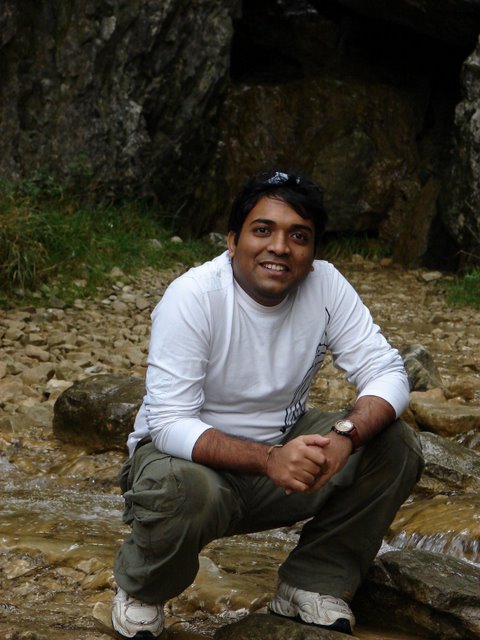
this relation between n water seems to be long one, since if i just corelated most of my snaps r hovering arnd water !
My state of mind is pretty confusing , not aware wht i need or wht i sud do, anyways like water i am flowing !
will be back soon with nice blog
Friday, March 31, 2006
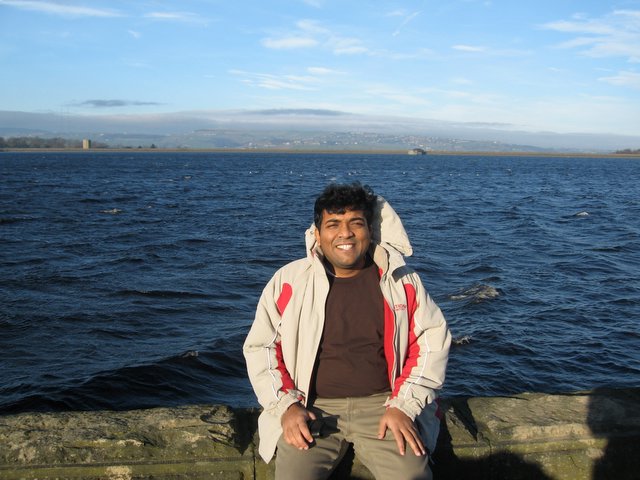
arrey wah mein hastha bhi hunnn
on shores of water ..... as thy say time and tide do not wait for any1 .... keep running with life/time haan keep smiling while running !!

Time to work - now !!!
 Saala i am enjoying here too ;-) now some serious stuff !!
I work too guys , thts my office Sony Ericsson manchester UK....
But apna desh is a real gold ..... miss it lots
I am ready to hold u
 I am ready to love you ready to hold, excuse me but i am speaking of parrots here !!
dont want your imagination go far
But certianly i do love tht one thing lots in my life ....now go ahead will set free ur imagination ha ha
kuch aisey lamhey- loving solitude feeling
 I do sometimes just look blank mindedly at sky which bring past as pages of my lifebook....yeh yadien ...so many question , i dont ask for answers but love just kindles mind and brings me back to practicality .....
I love it whtever it is - small small happiness


Subscribe to:
Posts (Atom)